
06 Jan 2017, 07:21 am

The research paper titled 'Jammu & Kashmir and Xinjiang Uyghur Autonomous Region - A Study in Contrasts' was released last month by IFRAS.
The paper, while drawing parallels between the provinces of Jammu & Kashmir (J&K) and Xinjiang Uyghur Autonomous Region (XUAR), highlights how the Indian and Chinese governments have adopted distinctly different approaches and methods to deal with comparable challenges in the two regions.
Enumerating similarities, namely a Muslim-majority local population, extremism, cross-border terrorism emanating from Pakistan and the disputed border, the paper concludes that as compared to XUAR, J&K today enjoys far greater political autonomy.
.jpg) Despite special political status granted to the two regions, the study highlights that while China's Regional Ethnic Autonomy Law has proven largely ineffective in ensuring true self-governance by ethnic groups like the Uyghurs, the people of J&K have been provided guarantees under Article 370 of the Indian Constitution, and a strong foundation to build a system of local governance.
Despite special political status granted to the two regions, the study highlights that while China's Regional Ethnic Autonomy Law has proven largely ineffective in ensuring true self-governance by ethnic groups like the Uyghurs, the people of J&K have been provided guarantees under Article 370 of the Indian Constitution, and a strong foundation to build a system of local governance.
The study also observes that though the issues confronting the Indian government vis-à-vis cross-border terrorism, separatism and the dispute with Pakistan over Kashmir, are more complex as compared to the problems faced by China in XUAR, the response of the Chinese government and its security forces against the Uyghurs has been far more overwhelming and disproportional.
The paper concludes that India has not imposed the kind of stringent controls on Muslims of the Kashmir Valley as China has done in Xinjiang, noting instead that India has gone to great lengths to protect the Kashmiri tradition, culture, and religion, unlike China that has, over the years, carried out a systematic policy of mass migration of Han Chinese to XUAR, besides cracking down on the observance of Uyghur religion, customs, practices, language and culture in Xinjiang.
.jpg) Started in 2011, The International Forum For Rights And Security (IFFRAS) is a non-profit international think-tank with headquarters in Toronto, Canada and offices in Brussels, Geneva, Ottawa and Washington.
Started in 2011, The International Forum For Rights And Security (IFFRAS) is a non-profit international think-tank with headquarters in Toronto, Canada and offices in Brussels, Geneva, Ottawa and Washington.
IFFRAS is currently chaired by legal scholar and Canadian Member of Parliament (MP) Mario Silva.
Mr Silva has an expertise in international law with his doctoral thesis based on the riveting topic of ‘failed states’. He is active in the arena of human rights and has been working towards combating social ills like anti-semitism and is also a staunch advocate of holocaust education.
Image Sources: PIB, Wikipedia Creative Commons and Kashmir Wallpapers
- Big boost for UPI: India’s digital payment system expands to Cambodia
- India at Cannes 2026: Glitter on the Croisette, But Where Is the Cinema?
- Sona College announces admissions to BTech in Computer Science, IT, AI-ML & Data Science
- NEET-UG to shift to Computer-Based test mode from 2027, says Dharmendra Pradhan; experts welcome move
- Sona College of Technology launches ‘Sona ChipIN Centre’ with latest semiconductor EDA tools
- Parampara founder Debabrata Sen brings Ayurveda to Gen Z with interactive session at Kolkata school
- Sona Institutions to open a College of Nursing at Salem
- Vee Technologies’ engineering division delivers 3,000th fire truck design for the US
- Jagannath comes to Kolkata: Up to 10 lakh devotees expected at Vishwashanti Mahayagya from April 17
- New Sheriff Goutam Ghose to unlock Kolkata's buried colonial past — records untouched since the East India Company

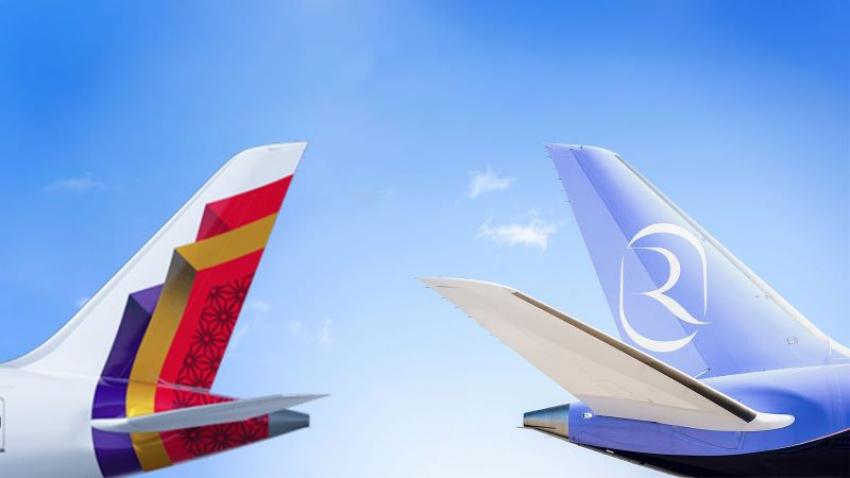
Air India and Riyadh Air have signed a Memorandum of Understanding (MoU) as they look to strengthen links between their networks and offer travellers more convenient connections between India, Saudi Arabia and destinations beyond.
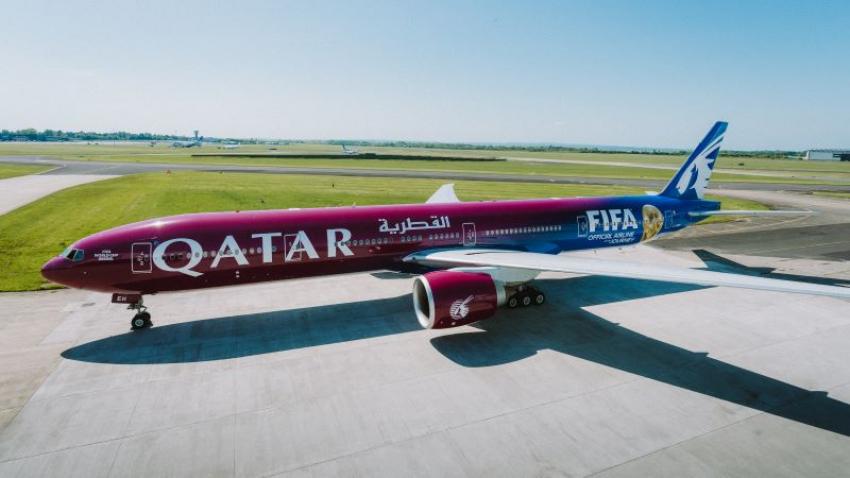
Qatar Airways has launched a Boeing 777 aircraft featuring a special FIFA World Cup 2026 livery, reflecting its ongoing association with FIFA. The aircraft has been unveiled ahead of the tournament and highlights the airline's role in connecting fans, teams, and football communities around the world.
Air India Express announces the launch of its ‘Xpress Sale,’ offering 5 million seats with savings of up to 50% on Lite (Zero Check-in Baggage) and Value fares across its domestic and international network.