
NITN | @notintownlive | 07 Dec 2018, 06:39 am
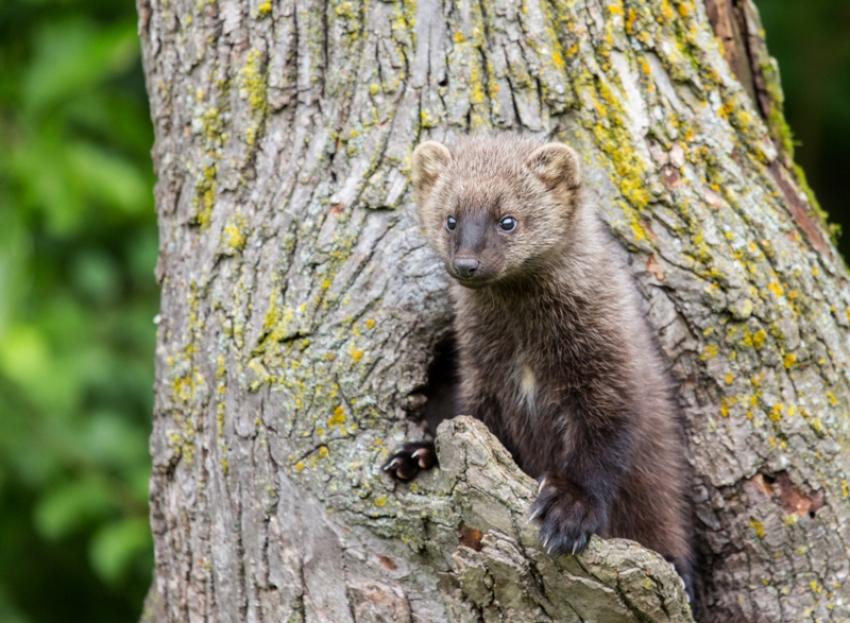
Sedro Woolley, WA, USA: State, federal, and partner biologists released six fishers this week in the Skagit River watershed of Ross Lake National Recreation Area, a unit of the North Cascades National Park Service Complex, as part of an effort to restore the species to Washington State of USA.
This is the first release in the North Cascades. Fishers are about the size of a house cat and are members of the weasel family. They were eliminated from Washington by the mid-1900s through over-trapping and habitat loss.
Fishers are currently listed as an endangered species by the state, and are being reviewed for protection under the federal Endangered Species Act. A voluntary fisher conservation program is available to private forest landowners that provides regulatory assurances should the species become listed. To date 49 landowners have enrolled 2.98 million acres in fisher conservation.
Fisher reintroduction efforts occurred in recent years on the Olympic Peninsula and near Mount Rainier in the South Cascades. The five females and one male released today were captured in Alberta, Canada as part of a multi-year project to reintroduce approximately 80 fishers to the North Cascades.
.jpeg)
They underwent veterinary checkups at the Calgary Zoo and were equipped with radio transmitters to track their movements over time. Conservation Northwest supports ongoing fisher monitoring with volunteers and remote cameras through its Citizen Wildlife Monitoring Project. In late 2015 and early 2016, 23 fishers, including 11 females and 12 males were released in Washington’s southern Cascades in Gifford Pinchot National Forest (GPNF).
In late 2016 and early 2017, 46 fishers were released in nearby areas of GPNF and in Mount Rainier National Park. Since then, monitoring efforts show released animals have successfully established themselves throughout the Olympic Peninsula and the southern Cascades, and have begun to reproduce.
Joining the partners in the event were representatives from the Upper Skagit Indian Tribe, the Sauk-Suiattle Indian Tribe, Lummi Indian Nation, and Nooksack Indian Tribe.
Staff from the offices of Senator Cantwell and Representative DelBene were also in attendance. “Watching the fishers return to their native forests of North Cascades National Park Service Complex after a long absence was inspiring,” said Karen Taylor-Goodrich, North Cascades National Park Service Complex Superintendent. “It was an honor to have the Upper Skagit Indian Tribe, the Sauk-Suiattle Indian Tribe, Lummi Indian Nation, and Nooksack Indian Tribe attend, bringing their blessings and songs.”
“We are excited to work with so many committed people to reintroduce fishers into another area where they have lived historically,” said Hannah Anderson, WDFW’s listing and recovery manager. “Fisher enthusiasts ranging across nations have come together to work toward robust wildlife populations with the reintroduction of these animals in Washington.” Fishers are related to wolverines and otters and are native to the forests of Washington, including the Cascade mountain range. This elusive carnivore preys on various small mammals – mountain beavers, squirrels and snowshoe hares – and is one of the few predators of porcupines.
“The North Cascades are a wild and iconic piece of the Pacific Northwest’s natural heritage and today they’re wilder and healthier with the return of the fisher to North Cascades National Park Service Complex,” said Mitch Friedman, Executive Director of Conservation Northwest. “We’re thrilled to be a part of this historic reintroduction effort, and thankful to all the scientists, agencies, and supporters who made it possible.”
“As one of Canada’s leading conservation organizations, we are delighted to lend our expertise in the field of reintroduction science to this international collaboration focusing on this endangered species,” said Dr. Clément Lanthier, president and CEO, Calgary Zoo.
“Fishers know no borders and it is only we when work together without divisions that we can truly make a difference for species at risk around the world.”
Support and funding for fisher reintroductions comes from WDFW, NPS, Conservation Northwest, Calgary Zoo, the U.S. Fish and Wildlife Service, the U.S. Forest Service, Washington’s National Park Fund, Northwest Trek, Pittman-Robertson Funds and State Wildlife Grants, and State Personalized License Plates, among others.
- Amsterdam plans huge tourist tax hike — Visitors could soon pay up to 20 percent
- Germany waives airport Transit Visa requirement for Indian nationals from June 3
- Anand Mahindra amazed by Vande Bharat's journey across Chenab Rail Bridge
- Passengers urged to document luggage amid Canadian airport drug-tag scheme
- South Africa Goes Visa-Free for Indians, But There’s a Catch
- From War Risks to Medical Bills: Why Indian Travellers Need Better Travel Insurance
- Beyond Books – A College Street Heritage Walk to Trace Kolkata’s Literary and Academic Legacy
- Rare Pahari Art from India’s Himalayas Finds a Home at Smithsonian Museum
- Dubai Unveils Its First Fully Private Beach for Women
- Banksy’s Latest Work Pops Up in London, Sparks Midnight Buzz



Air India and Riyadh Air have signed a Memorandum of Understanding (MoU) as they look to strengthen links between their networks and offer travellers more convenient connections between India, Saudi Arabia and destinations beyond.
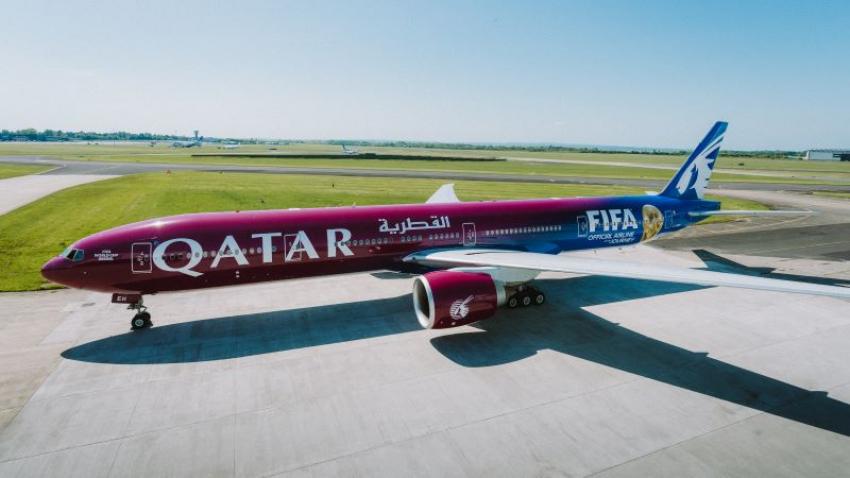
Qatar Airways has launched a Boeing 777 aircraft featuring a special FIFA World Cup 2026 livery, reflecting its ongoing association with FIFA. The aircraft has been unveiled ahead of the tournament and highlights the airline's role in connecting fans, teams, and football communities around the world.

Air India Express announces the launch of its ‘Xpress Sale,’ offering 5 million seats with savings of up to 50% on Lite (Zero Check-in Baggage) and Value fares across its domestic and international network.