
09 Jun 2017, 07:29 am
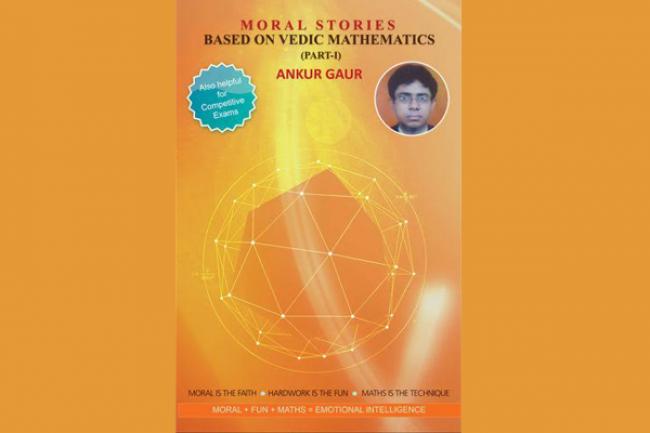
A book on Mathematics—the thought itself is enough to make a mere mortal break out into sweat. And I am no exception. So a book that promised to make maths easier was like finding a rare piece of gem.
It was with immense curiosity that I opened Moral Stories Based On Vedic Maths to see what Ankur Gaur has written in the book.
The book began with a unique exercise. The author said that if this exercise can be practiced diligently for 37 days, then doing large additions orally will become very easy.
I could hardly believe what I was reading in print. I am a person who needs a calculator for the simplest of calculations.
I was curious enough to start practising it immediately.
It’s been just a week since I have started but I do think it’s helping slightly though I still have a long way to go. I just hope the author's miraculous method works.
Now let me come to the moral stories that are written in the book.
The best thing about each of the story is that they don’t talk about morals that we are taught about generally.
Each story talks about morals applicable in our daily lives.
I would like to talk about a story titled Vertically and Crosswise, an impressive story in terms of its theme.
This story talks about two stages of child development—vertical development and crosswise development.
The way these two concepts have been explained easily through the story of two brothers is really commendable.
The author has explained how important it is for a growing child to inculcate the concept of ‘we’ so that he can grow up to become an active contributor to the society.
In the environment of growing intolerance in the country, stories like this, which spread the message of oneness, needs to be promoted.
The brilliance of this story does not end with the moral itself.
It leads to the mathematics part where the author teaches a vertical and crosswise method of doing large multiplications.
And believe it or not, this amazing method can be used to multiply numbers consisting of four to five digits each.
So the vertical and crosswise methods are concepts that are applicable both in our lives and in mathematics.
Each story ends with a very relevant lesson relevant to our lives and then straightway we plunge into solving mathematical problems.
And somehow we are using the same principle to solve the sum that we used to solve a real life problem.
Ankur Gaur really shows that mathematics is connected to real life. After reading this book I totally believe this.
(Reviewed by Liza Gomes)
- Birbhum: Sitaramdas Omkarnath Chair at Biswa Bangla Biswavidyalay
- Rotary Club of Calcutta East Central celebrates centenary of iconic actor Santosh Dutta with statue unveiling
- Shiny things by Jinia: A luxury evolution by visionary entrepreneur, healer
- Mystique and Memories: Wiccan Brigade hosts its first Halloween Fest in Kolkata
- Rotary Club of Calcutta Samaritans hosts three-day youth leadership awards program for tribal students in Bakura
- Rotary Club, South Kolkata Vision inaugurate newly developed children's park in Sonarpur
- Akhil Bharat Jaiguru Sampradaya and Omkarnath Mission volunteers care for terminally ill patients at Mahamilan Math hospice
- Bengali couple promoting Indian music and culture among young Americans
- Indi Setu: Wildlife on the Brink: Can We Rewild a Warming World?
- Durga Puja sustainability: One of the oldest awards goes flex-free


Air India, India’s leading global airline, and Maldivian, the national airline of the Maldives, have entered a bilateral interline partnership aimed at boosting connectivity between the two countries.
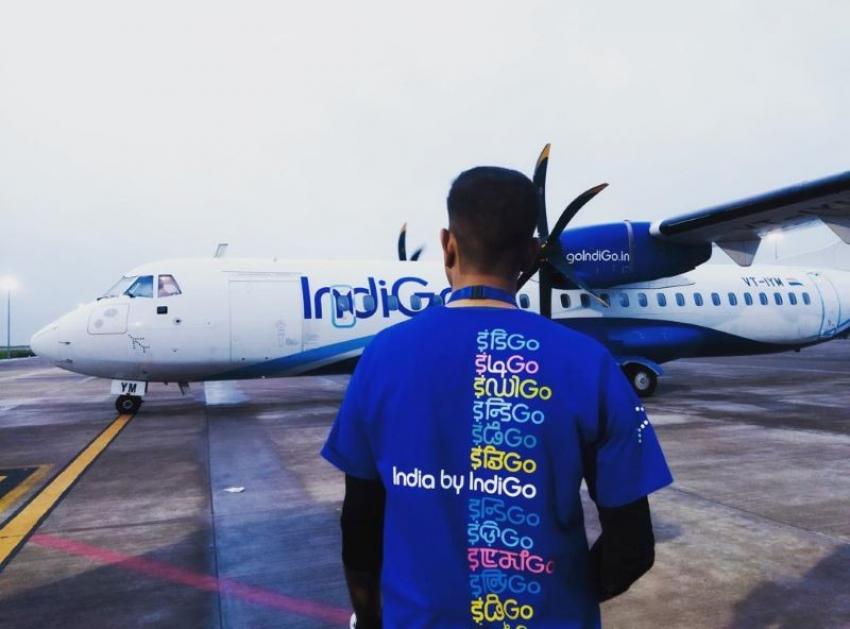
IndiGo, India’s largest airline, is grappling with one of its most severe operational crises in recent years, with widespread flight delays and cancellations disrupting travel across the country for a second consecutive day.

Tata Group-owned Air India on Sunday announced the reinstatement of its codeshare agreement with fellow Star Alliance carrier, Air Canada, to offer more flight options for travellers and boost connectivity between India and Canada.