
NITN | @notintownlive | 13 Dec 2019, 04:09 am

On a winter evening in Kolkata, author Sharbari Ahmed was the guest at An Author's Afternoon presented by Shree Cement Ltd and organised by the Prabha Khaitan Foundation in association with Taj Bengal Kolkata. IBNS correspondent Souvik Ghosh brings excerpts of her extensive conversation on her book Dust Under Her Feet , a tale of wartime Calcutta in 1940s
Why did you write Dust Under Her Feet in the backdrop of Kolkata? What role Kolkata played in the book?
Firstly it is a pleasure to be in the city on which the novel is set in. My mother was born in Kolkata and she had to leave the city immediately after the partition. I came here to the city for research and I tried to imbibe the city so that I can create the story.
.jpg)
You didn't stay in Bengal extensively. So did you find it important to be in Bengal physically to sketch the characters?
Even though I was raised in the United States, I was actually born in Dhaka. In 1971, my mother insisted on coming back (to Dhaka) because it was becoming (a part of) Bangladesh. My mother wanted me to be born there. But we had to leave immediately because my father was on Pakistan's hit list. So three weeks after I was born, we had to flee to the United States. I was raised very much in the Bangladeshi immigrant community. So it was not very hard for me to characterise. The characters came as an amalgamation of all the people I knew there.
.jpg)
All the women characters in your book are Muslims but strong. Did you make that distinction consciously?
It is more subconscious probably. I think I am trying to kind of subvert some stereotypes involved with Muslim women and South Asian women. There is a notion that the Muslim and South Asian women are submissive and oppressed. The Bengali women in particular are very opinionated. I come from a culture and heritage of outspoken women- be it Muslim or Bengali.
Why did you choose Kolkata and referred to World War II in the book?
Like I said my mother's story is very inspiring. But the novel interestingly is far away from my generation. It is an interception of both my American and Bengali identities. I grew up in the United States watching black and white movies of Hollywood. But at the same time, I had the Bengali identity.
.jpg)
So I think Hollywood and Bengal are the epicentres of great Bengali stories. So I have put these two things together. So the book is a result of the two identities. Kolkata seems like a logical choice as I realised during my research that there was a huge American military presence in the city before they were shipping off to Burma.
The Americans were really cool and chilled out.
The Americans were cool and chilled out as Yasmin (Yasmin Khan, the protagonist who is the doyenne of the nightclub scene in 1940s Calcutta when the US sets up a large army base in her city to fight the Japanese in Burma) observed that may be they as more accessible than the British people.
.jpg)
But she noticed that the Americans were segregating their African-American soldiers and treating the Jewish soldiers with suspicion. So there was hypocrisy which feeds into Yasmin's notion of absurd colonialism and racism.
Internationally English literature also focuses on Punjab while dealing with Partition and not Bangladesh.
This is something I want to explore but didn't figure out just yet. I often wonder if East Bengal was given the choice, they would have gone with India or Pakistan. Nobody asked them. On Aug 15, 1947 morning, our ancestors woke up and they were told they belong to East Pakistan.
.jpg)
I wonder what they had done if they were given a choice. I don't think they would have gone with Pakistan as it does not make any sense culturally, intellectually or even spiritually.
- Big boost for UPI: India’s digital payment system expands to Cambodia
- India at Cannes 2026: Glitter on the Croisette, But Where Is the Cinema?
- Sona College announces admissions to BTech in Computer Science, IT, AI-ML & Data Science
- NEET-UG to shift to Computer-Based test mode from 2027, says Dharmendra Pradhan; experts welcome move
- Sona College of Technology launches ‘Sona ChipIN Centre’ with latest semiconductor EDA tools
- Parampara founder Debabrata Sen brings Ayurveda to Gen Z with interactive session at Kolkata school
- Sona Institutions to open a College of Nursing at Salem
- Vee Technologies’ engineering division delivers 3,000th fire truck design for the US
- Jagannath comes to Kolkata: Up to 10 lakh devotees expected at Vishwashanti Mahayagya from April 17
- New Sheriff Goutam Ghose to unlock Kolkata's buried colonial past — records untouched since the East India Company

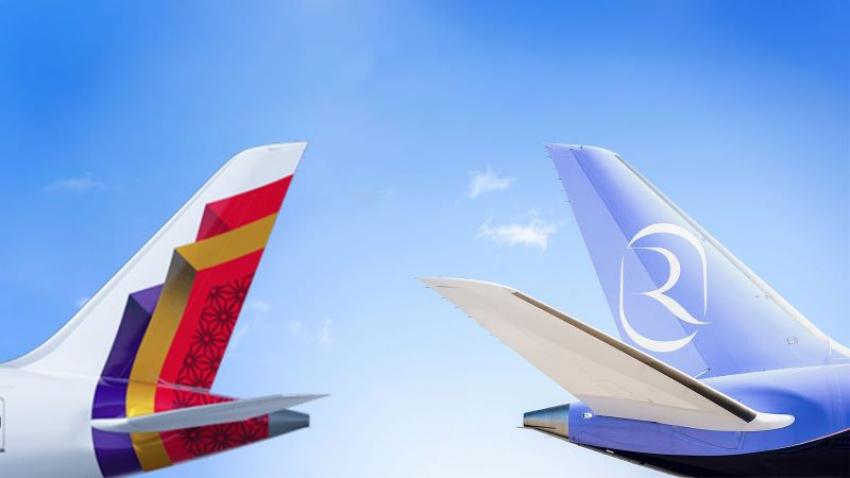
Air India and Riyadh Air have signed a Memorandum of Understanding (MoU) as they look to strengthen links between their networks and offer travellers more convenient connections between India, Saudi Arabia and destinations beyond.
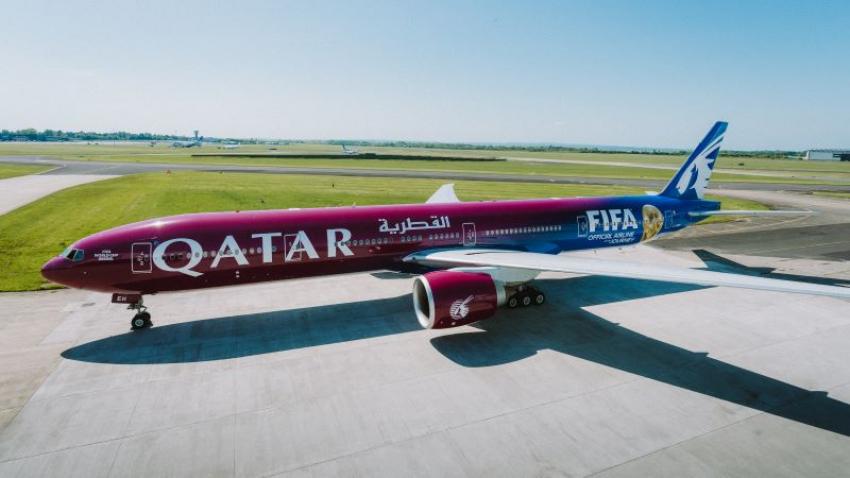
Qatar Airways has launched a Boeing 777 aircraft featuring a special FIFA World Cup 2026 livery, reflecting its ongoing association with FIFA. The aircraft has been unveiled ahead of the tournament and highlights the airline's role in connecting fans, teams, and football communities around the world.

Air India Express announces the launch of its ‘Xpress Sale,’ offering 5 million seats with savings of up to 50% on Lite (Zero Check-in Baggage) and Value fares across its domestic and international network.