
NITN | @notintownlive | 10 Apr 2024, 07:31 am
 Sundarbans
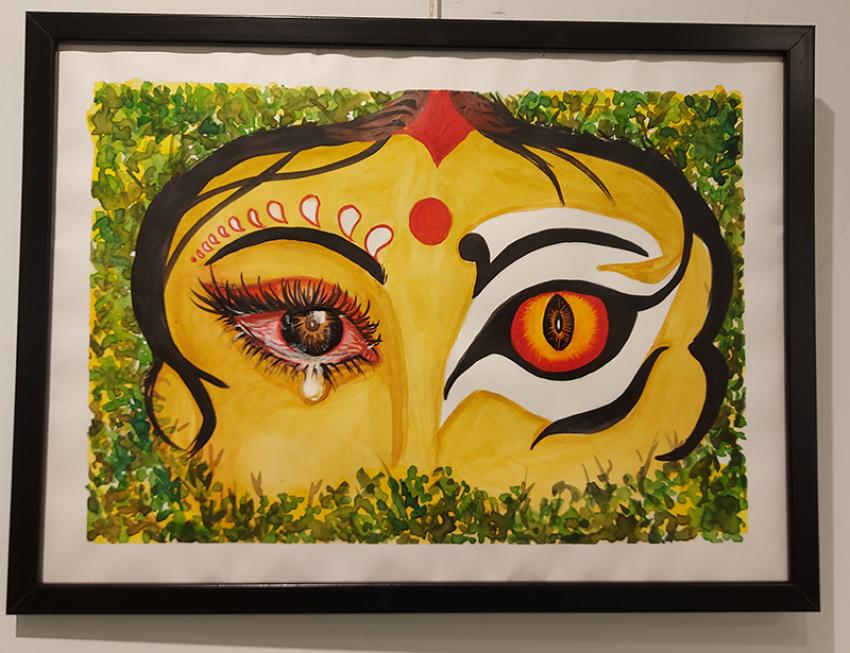
At first glance, it was the painting of a Hindu married woman’s face – her forehead marked by the traditional vermillion dot, the vermillion running through her parted hair.
A fleeting second later, I was struck by the intense presentation.
One of her eyes was of a human while the other was of a tiger.
With a few basic brushstrokes, the unknown artist had conveyed the dangers faced by the people who call the Sundarbans forest their home and who have to venture inside the forest for a living (collecting honey, fishing, catching prawn seedlings and crabs).
The human eye had a teardrop falling from it while the tiger’s eye was a gleaming red.
The words of Nitai Sardar (name changed), a local youth who served as a temporary deckhand on the cruise boat that we were travelling in several years ago, came back to me.
To most travellers, cruising through the deltaic network of rivers and channels through the Sundarbans in West Bengal, sighting a tiger in the wild is the ultimate goal.
“But we wish the tiger stays away in the remote jungle and we do not want to catch a glimpse of it,” Sardar.
“To you, the tiger is an elegant animal, wonderful to watch and photograph,” he had said. “For us, a tiger is the devil incarnate, merciless and cruel.”
The dramatic painting was part of an exhibition called ‘Chitropot’ and presented by Kolkata Society for Cultural Heritage (KSCH) in collaboration with the Directorate of Forest, South 24 Pargana Division, West Bengal.
The city-based organisation is working with the state forest department and others to help the residents of the Sundarbans to reduce their dependence on the forest and find alternative means of income generation.
Owing to its unique landscape, a lot of thought has to go into the income generation plans, explained Rajkumar N, a member of the local Joint Forest Management Committee.
To protect the Sundarbans from natural calamities, large scale mangrove plantation activities are taking place.
“But the cattle reared by the families here graze on the mangrove plants and destroy them,” he said. “To ensure that people do not rear cattle, we have to give them alternative means of income.”
Called ‘Chitropot’, the exhibition was part of KSCH’s eponymous platform where they help talented artists (especially women) from the Sundarban region to train and showcase their skills and help in the marketing of their products.
The exhibition was inaugurated by Andrew Fleming, British Deputy High Commissioner to Kolkata.
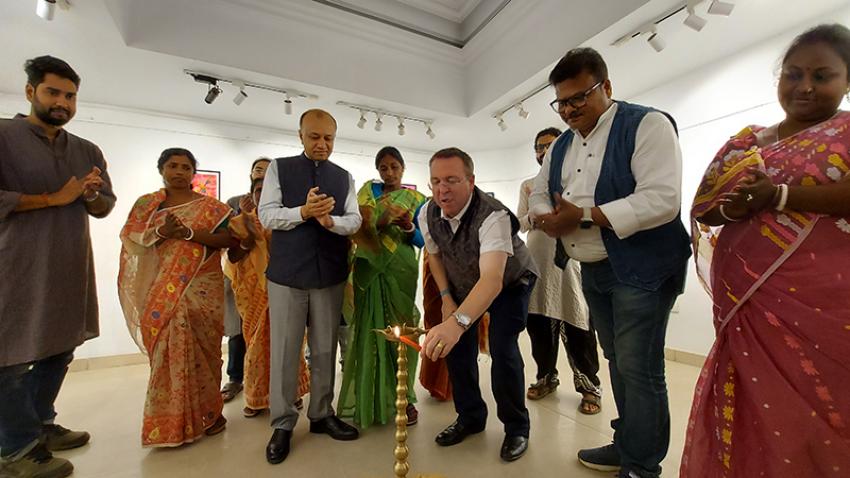
He was joined by Niraj Singhal, IFS, Principal Chief Conservator of Forests and Head of Forest Force, West Bengal, and Milan Kanti Mondal, Divisional Forest Officer, South 24 Pargana Division, in lighting the lamp and declaring the exhibition open.
The exhibition showcased paintings by women artists drawn from various households along the Sundarbans delta, who were initially chosen through an art competition held at the village level.
Some of them were also present at the exhibition.
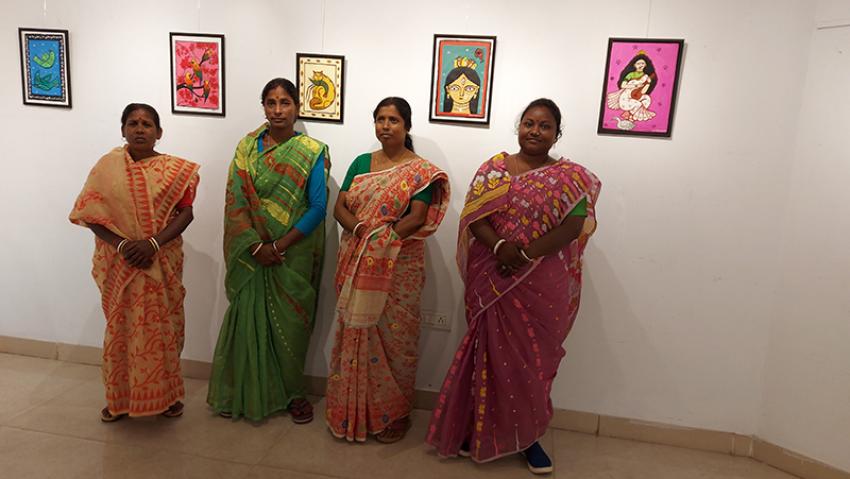
“While most of us are aware of the patachitra painting culture of Midnapore,” said artist Chinmoy Mukhopadhyay, who has been mentoring the Chitropot members, “few people know about the art form which also prevailed in the Sundarbans region.”
“We are trying to revive the almost forgotten art form by training these women,” said Mukhopadhyay. “But it is an uphill task as most of the traditional practitioners have died or have moved to more paying jobs.”
While two ‘jorano pot’ (storytelling folded scrolls) were displayed at the entrance, most of the paintings were in the style of ‘chouko pot’ and framed as wall hangings (as the paintings are for sale, informed Sourav Mukherjee, founder-director of KSCH).
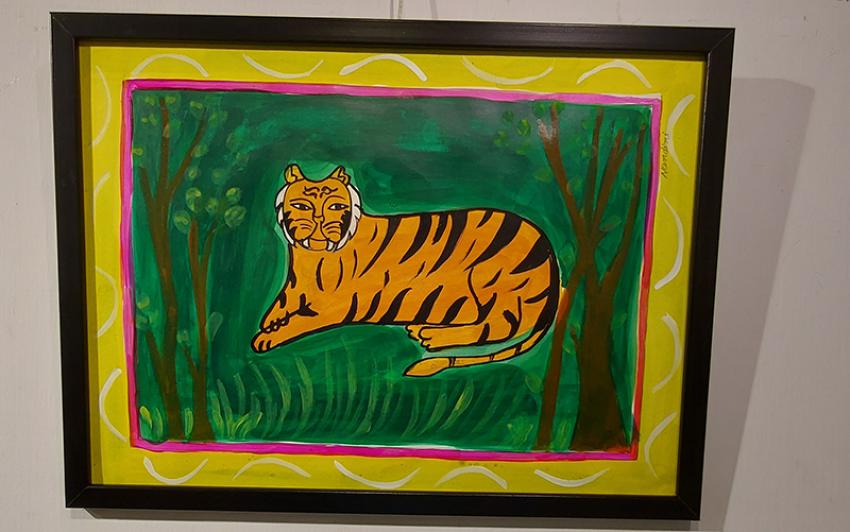
The paintings, simple but colourful, drew inspiration from nature, the animal world, and the socio-cultural lifestyle - tigers in various poses, a deer arrested in mid-flight, turtles, Bonbibi (the protector of the forest), Manasa (the goddess of snakes), etc.
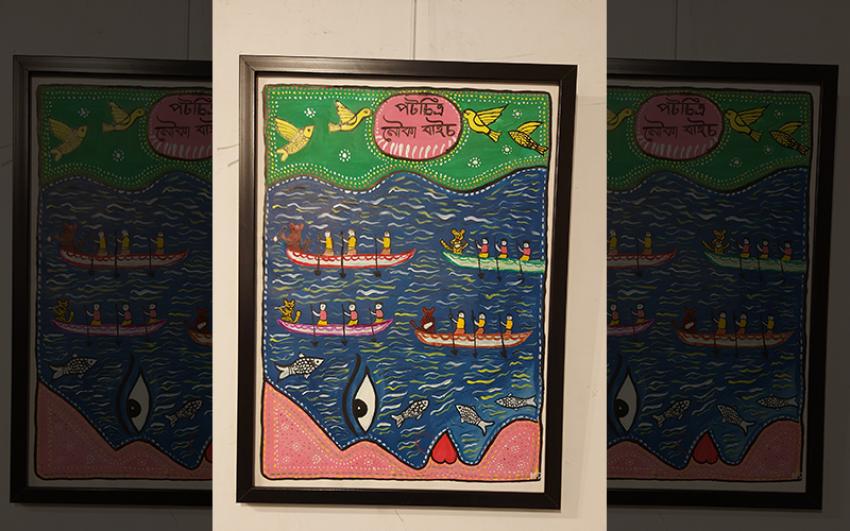
One noteworthy picture was that of ‘nouka baich’ or boat race with a modern twist.
The artist had not only depicted an almost dwindling sport once held in various parts of Sundarban but also used the canvas to portray the ecosystem.
The exhibition is open till April 11 at Gallery Gold.
Reporting by: Uttara Gangopadhyay
- From Kennedy’s Proposal to 1850s Saloons: The Three Historic D.C. Restaurants Everyone Must Try
- This city has the best bagel in the US, and it’s not New York!
- I escaped to Pachmarhi — what I found in the queen of Satpura left me spellbound
- Air Canada just ranked the Best New Restaurants of 2025 - And the Top Spot isn't who you think
- Rediscovering Arunachal's Monpa Cuisine: One Woman’s Millet Momo Revolution
- Discovering Heritage: A visual journey through Odisha crafts museum Kalabhoomi
- From kebabs to biriyani: Lucknow gets UNESCO honour for its royal cuisine
- Delta takes Spanish flavours to the skies
- Kolkata’s iconic Kathi Roll among world’s top 10 wraps: TasteAtlas
- Yellow Taxis and the Colours of Puja

Air India, India’s leading global airline, and Maldivian, the national airline of the Maldives, have entered a bilateral interline partnership aimed at boosting connectivity between the two countries.
IndiGo, India’s largest airline, is grappling with one of its most severe operational crises in recent years, with widespread flight delays and cancellations disrupting travel across the country for a second consecutive day.

Tata Group-owned Air India on Sunday announced the reinstatement of its codeshare agreement with fellow Star Alliance carrier, Air Canada, to offer more flight options for travellers and boost connectivity between India and Canada.